Overview
Discover the peaceful Himalayan kingdom of Bhutan with this immersive 5 Nights / 6 Days journey through Thimphu, Punakha, and Paro. Experience ancient monasteries, majestic mountain passes, vibrant Bhutanese culture, scenic valleys, and iconic landmarks like Tiger’s Nest Monastery. From spiritual heritage sites and traditional markets to breathtaking Himalayan landscapes, this Bhutan tour offers a perfect blend of culture, spirituality, and nature.
Highlights
- Explore Bhutan’s Capital – Thimphu
- Visit the Famous Tiger’s Nest Monastery
- Discover Punakha Dzong & Chimi Lhakhang
- Visit Memorial Chorten & Buddha Point
- Stunning Himalayan Mountain Views
- Peaceful Monasteries & Scenic Valleys
Itinerary
Arrive at Paro International Airport. After arrival, proceed to the immigration counter. Complete Immigration formalities and you will be met with your chauffeur/ guide at the outside of the airport terminal.
You will be transferred to Thimphu.
Thimphu - is the capital and the largest city of the Kingdom of Bhutan. Thimphu is the political and economic hub of Bhutan. The city is located on the bank of River Wang Chuu. Thimphu contains most of the important political buildings in Bhutan, including the National Assembly of the newly formed parliamentary democracy and the residence of the King. Thimphu holds a fascinating four-day festival, held every year during autumn (September/ October).
Arrive at Thimphu. Check-in to your hotel.
Later proceed for a short sightseeing of Thimphu. (Sightseeing on this day won’t be possible if the flight arrival time is beyond 2 pm)
Memorial Chorten - On the western side of Thimphu's Memorial Chorten, a row of wooden platforms sits in the long grass. Each has been polished smooth by the prostrations of faithful worshippers who gather here in sun, rain or snow, to pay their respects to His Majesty Jigme Dorji Wangchuck (1928–1972), the Third King of Bhutan. The Chorten, with its elaborate golden peak representing the crescent moon and sun, is one of Thimphu's most striking religious landmarks. Constructed in 1974, the Tibetan-style chorten's whitewashed exterior boasts richly decorated chapels - one facing each of the cardinal directions.
Overnight stay in Thimphu.
Night Stay: Thimphu
Breakfast at the hotel. After breakfast, proceed for full day sightseeing tour of Thimphu.
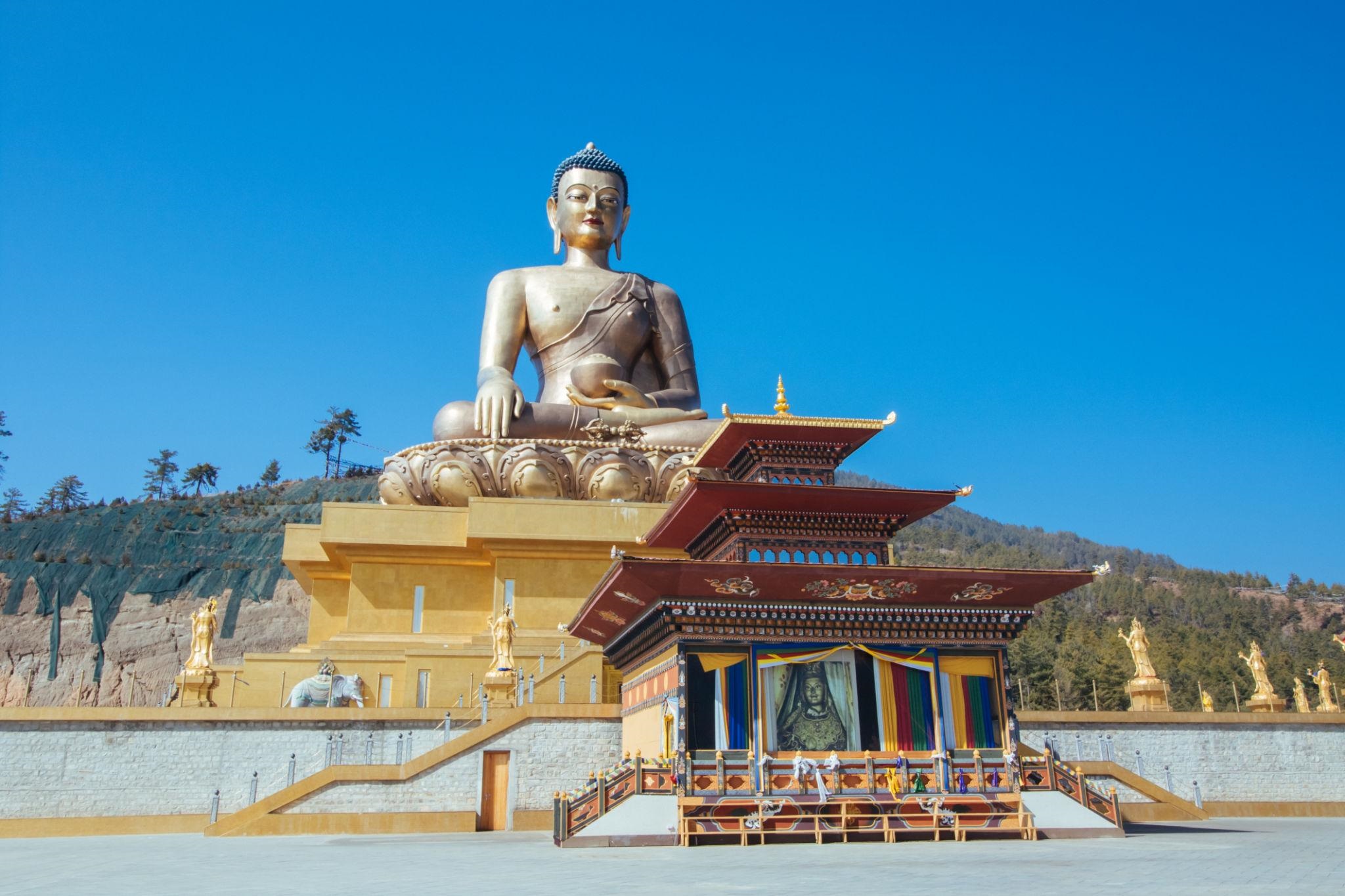
Kuensel Phodrang – The statue was cast in bronze in China and transported by sea and road to this site once occupied by the palace of Druk Desi, a secular ruler of Bhutan in the eighteenth-century. At its completion, the statue will contain 125,000 gilded Buddha statues and a wealth of other statuary.
Takin Reserve & Mini Zoo - Add to Wish List Hidden in a fold of the forest-draped hills high above Thimphu, a herd of takin make their home in the Mothithang Takin Preserve. Formerly a small zoo, the king decreed that the animals should be freed rather than kept in captivity. However, instead of wandering deeper into the hills, the tame takin took to the streets of Thimphu, where they became a traffic hazard as they foraged for food.
Anim Dratshang (Nunnery) - On a hillside above Thimphu's Tashichho Dzong, just off Gaden Lam, stands Thangtong Dewachen Dupthop Nunnery. Home to around 60 nuns, the modest structure was built in 1976 by the 16th incarnation of Thangtong Gyelpo, the famed fifteenth-century "Iron Bridge Monk" who forged chain-link bridges that still span several of Bhutan's fast-flowing rivers. The road to the nunnery offers magnificent views of Tashichho Dzong, while the small complex houses a covered chorten and an unusual pillar topped with two carved deer (symbolic of the Deer Park at Sarnath, where Buddha first taught after his enlightenment) and a wheel of law.
Folk Heritage Museum - The Folk Heritage Museum, located on the outskirts of Thimphu, recreates a traditional Bhutanese family home inside a beautiful 19th century rammed earth and timber building. Here, the family's prized possessions are on display: shiny wooden bowls line the kitchen shelves, richly patterned fabrics hang alongside aged leopard fur bags in the room next door, and gold glints from thangkas hung in the family's altar room.
Royal Textile Academy & Museum - Intricately patterned wild silk kiras from Lhuentse hang alongside rough nettle fiber cloth from Zhemgang in Bhutan's excellent Royal Textile Academy. The museum, housed in an impressive modern building, celebrates the country's vibrant and varied tradition of hand weaving.
Handicrafts Market – An interesting market with local items and bargain price handicraft goods.
Tashichho Dzong - Standing proudly on the western bank of the Wang Chhu a few kilometers north of central Thimphu, Tashichho Dzong looks every inch the seat of government. While the National Assembly no longer convenes inside the fortress's whitewashed walls, today the dzong still houses the throne room and the king's offices as well as the ministries of home affairs and finance.
Night Stay: Thimphu
Meals: Breakfast
Breakfast at the hotel. After breakfast, proceed for Punakha.
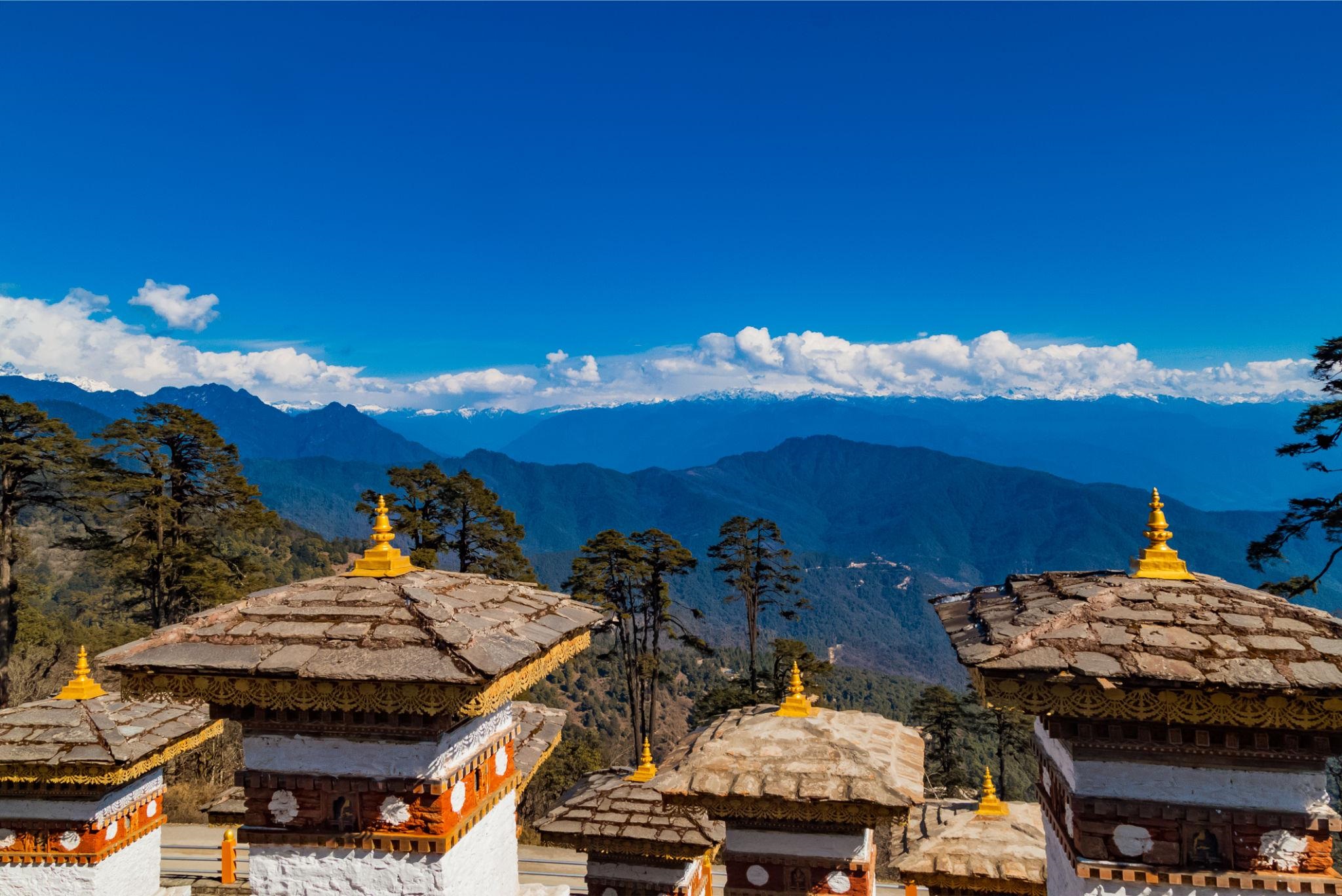
En-route visit Dochu La - A mountain pass leading further into the Punakha Valley. It offers a stunning 360 degree panoramic view of Eastern Himalayan mountain ranges. The view is especially scenic on clear, winter days with snowcapped mountains forming a majestic backdrop to the tranquility of the 108 chortens gracing the mountain pass. Enjoy lunch at newly open restaurant Druk Wangyel Cafe and visit Punakha Dzong and Chimi Lakhang on your way to Punakha.
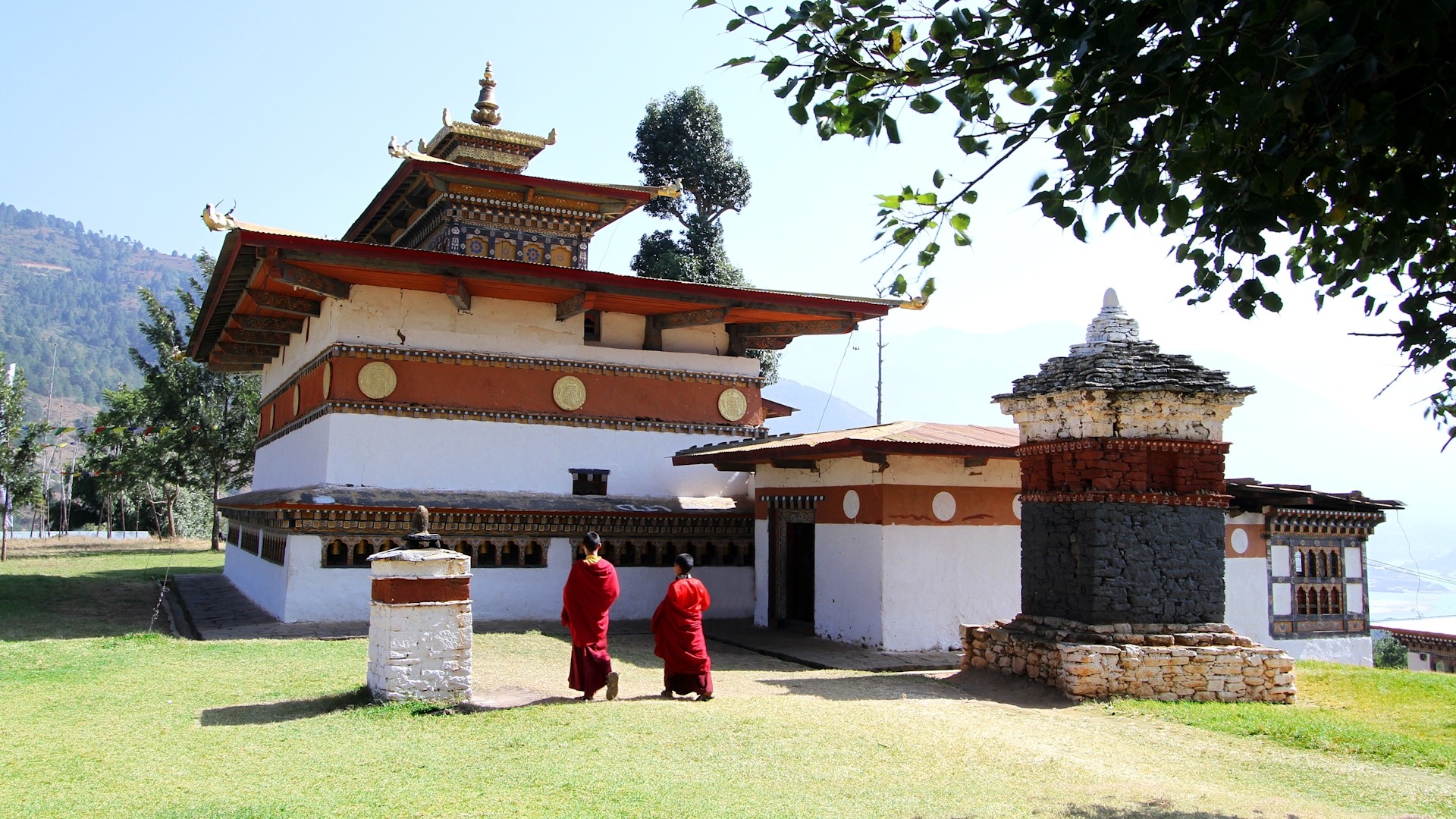
Chimi Lha Khang - Built in 1499, Chimi Lhakhang is dedicated to the "Divine Madman," Drukpa Kunley, a sage revered in Bhutan for his unorthodox teachings and his use of a "flaming thunderbolt" to fight evil. While Chimi Lhakhang marks the spot where Drukpa Kunley defeated and buried a much-feared demoness, today the hilltop lhakhang is visited by expectant mothers and families with newborns to pray for their children's health. Kindly note that a walking of good 45 minutes has to be undertaken.
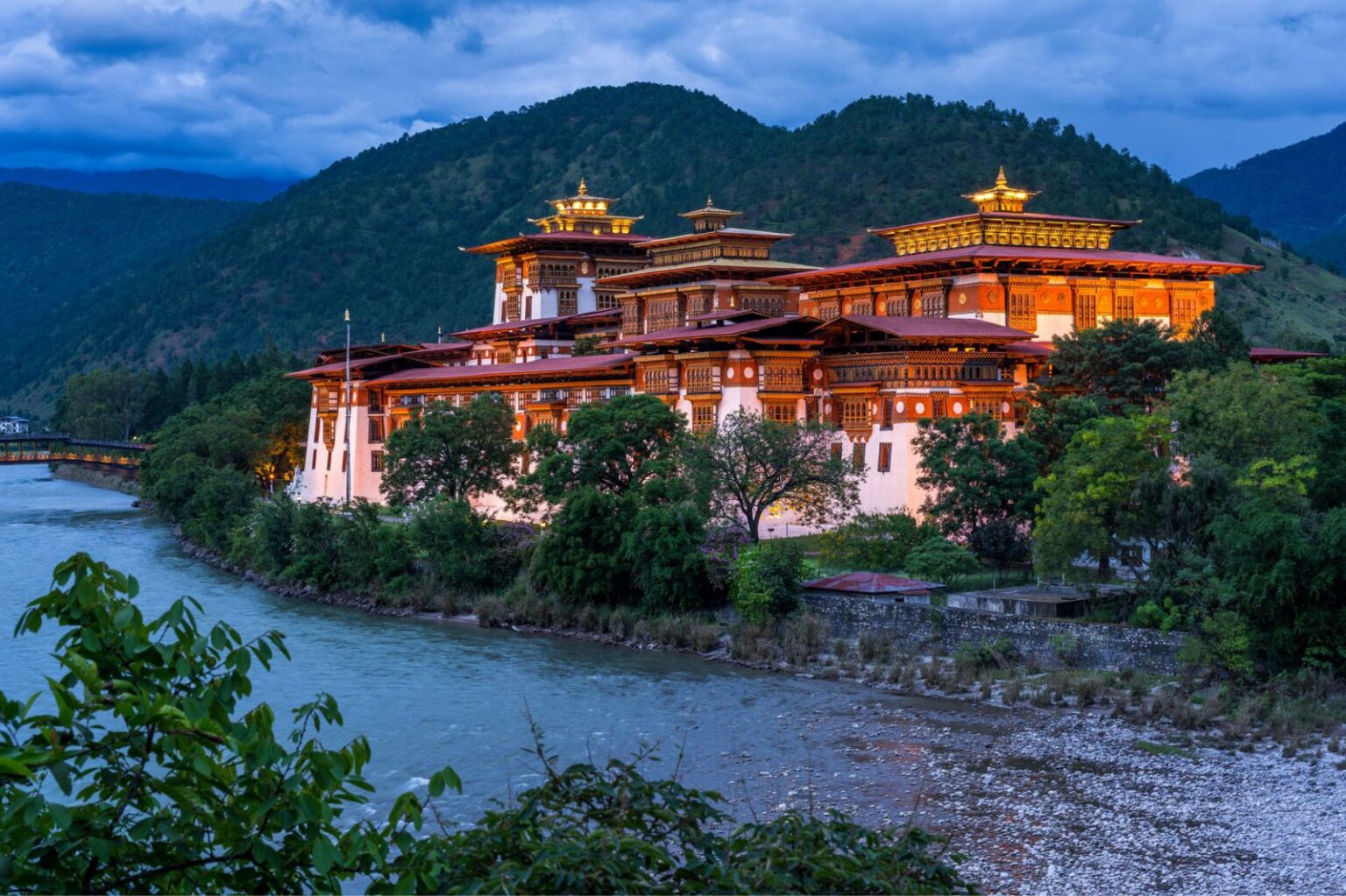
Punakha Dzong - Visitors approach the dzong over a long cantilever bridge that spans the Mo Chhu and up a steep flight of wooden steps. The first dochey or courtyard houses Punakha dzongkhag's government offices, with darkened passages leading south around the six-story utse to the monastic quarters that line the second courtyard. The utse contains Bhutan's holiest relic, an image of Chenrezig (the bodhisattva of compassion) that the Zhabdrung brought to Bhutan from Tibet — although this is not on public display.
Return back to the hotel.
Night Stay: Punakha Meals: Breakfast
Breakfast at the hotel. After breakfast, you will be transferred to Paro. Arrive Paro by the afternoon and proceed for a brief sightseeing of Paro.
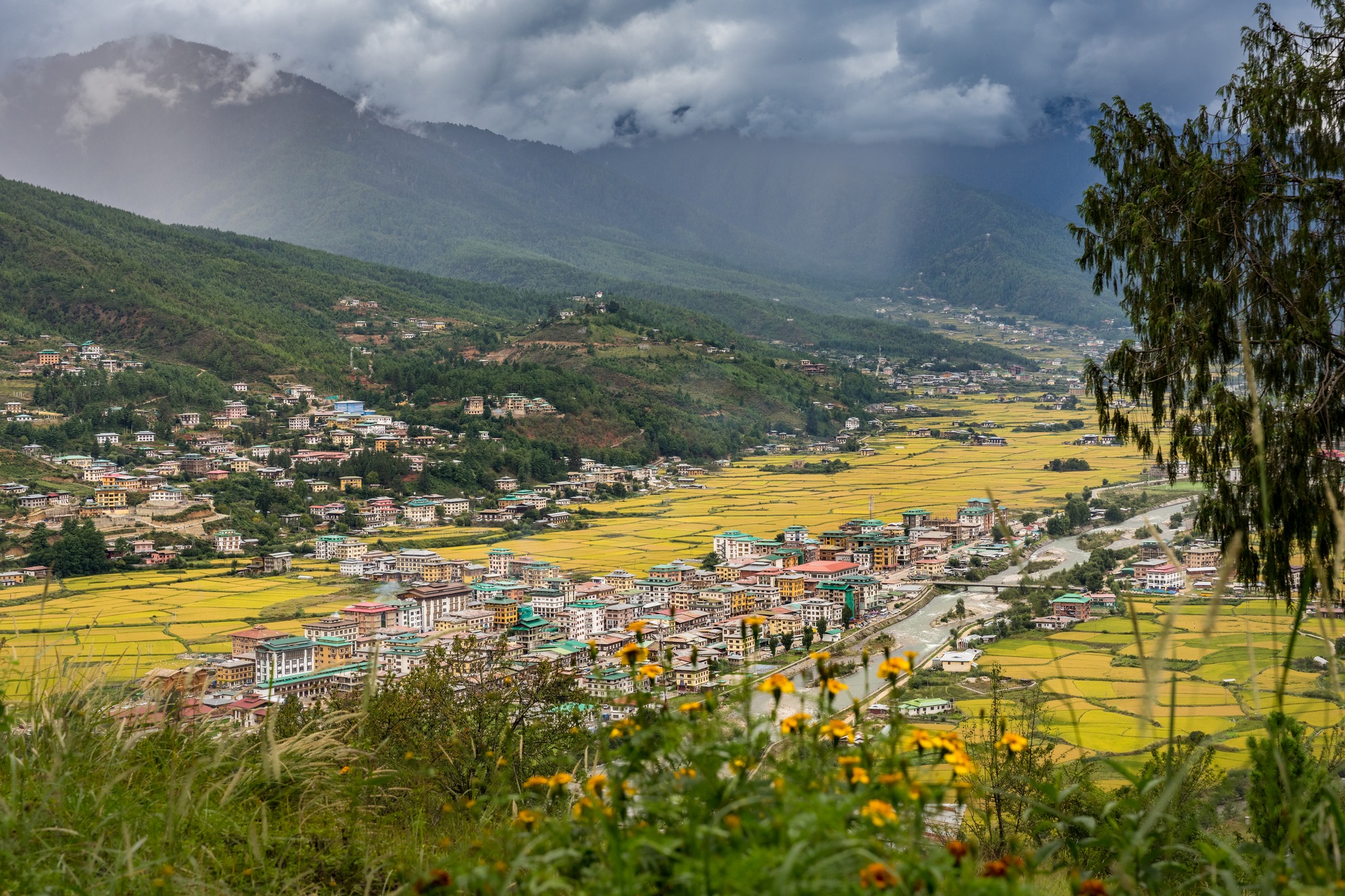
Paro - The valley extends from the confluence of the Paro Chhu and the Wang Chhu rivers at Chuzomupto Mt. Jomolhari at the Tibetan border to the North. This picturesque region is one of the widest valleys in the kingdom and is covered in fertile rice fields and has a beautiful, crystalline river meandering down the valley.
DrukgyelDzong – The smoke-smudged walls of DrukgyelDzong's four-story utse (central tower) still stand intact among the surrounding ruins. Located at the head of the Paro Valley, the once-magnificent DrukgyelDzong was built in 1649 and stood along a major route into Tibet for three centuries until it burned to the ground in a 1951 fire. The dzong's name, which translates as “Bhutan's Victory,” commemorates a 1644 defeat of Tibetan forces in this region. Today, a narrow path spirals up towards the dzong past the collapsed remains of a walled passage that once secured the dzong's water supply. Go through the gate to access a flagstoned courtyard once used for festivals. Beyond this lies the main body of the dzong, where wild strawberries and herbs sprout among the rubble.
KyichuLakhang - When it was divined that she was preventing the spread of Buddhism, the great seventh-century Tibetan king SongtsenGampo pinned her in place with 108 magically constructed temples -- allowing Buddhism to flourish above her restrained body. One of Bhutan's two ancient demoness-pinning temples, Paro'sKyichuLhakhang is believed to hold the demoness's left foot in place. With its tiered roof and luminous white walls, the lhakhang's age is not immediately apparent. It is only inside the monastery's ancient heart, the JowoLhakhang, that the sanctuary's long history is palpable. Golden murals shine faintly from smoke-darkened walls, and the floor has been polished smooth by the feet of countless faithful practitioners. The holiest part of the chapel surrounds the revered seventh-century statue of JowoSakyamuni, visible through a gilded door.
Ta Dzong - National Musuem of Bhutan
Night Stay: Paro
Meals: Breakfast
Breakfast at the hotel, visit Paro.
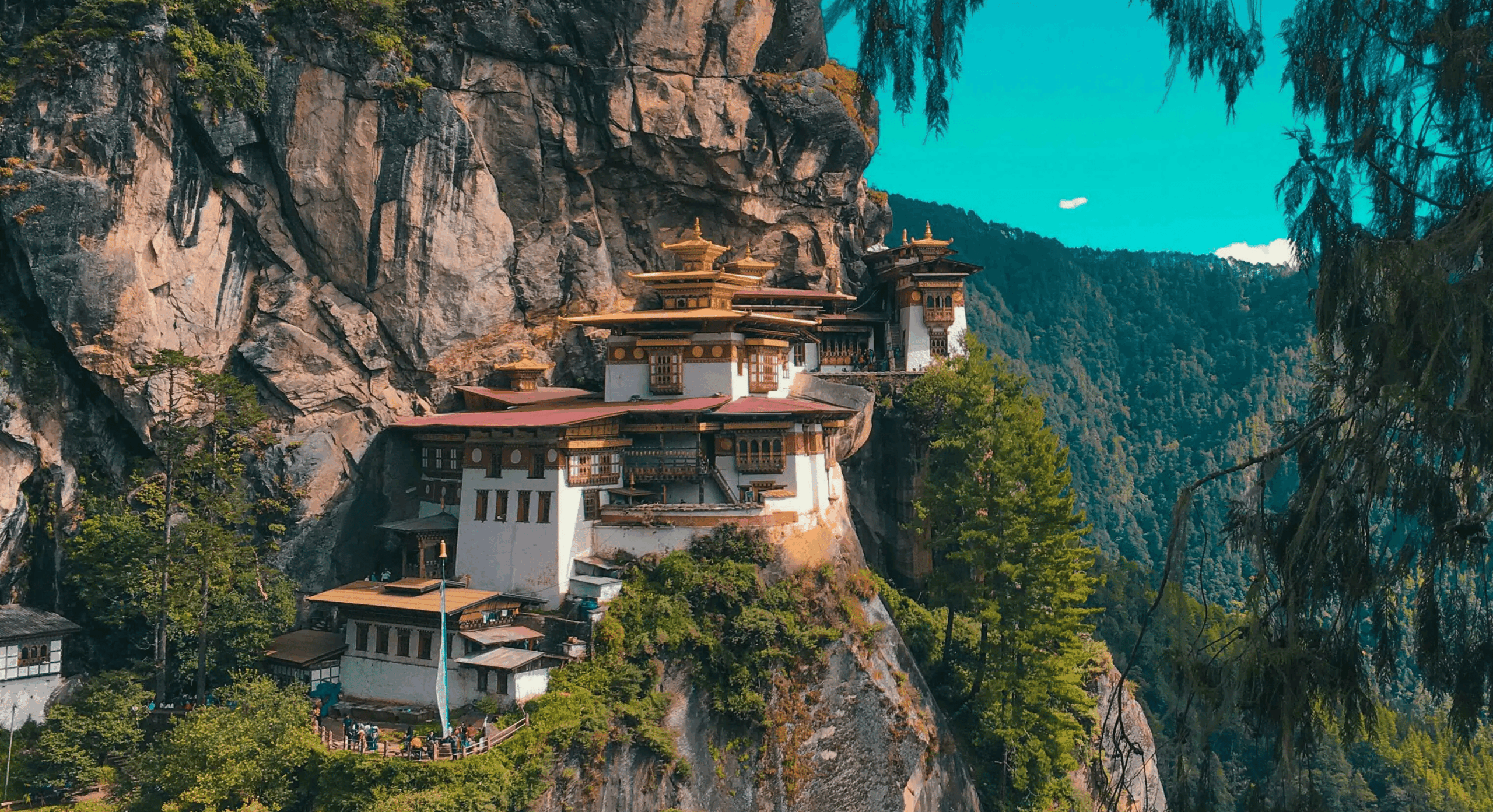
Tiger Nest - From a distance, Bhutan's most iconic building seems to float, weightless, halfway up a sheer cliff-face, 900 meters (3,000 feet) above the floor of the Paro Valley. As you wind your way breathlessly up the long, steep path towards TaktsangLhakhang, the monastery periodically reveals itself, rising out of the forest, closer and more solid with each re-appearance.
OR
Chele La Pass – the highest point on Bhutan’s Dantak roads, crests at 3988 meters (roughly 13,000 feet) above sea level. The bright yellow sign marking its location stands next to a traditional stone fireplace and stove, a Buddhist prayer wheel marked with a quote advocating kindness, and a small hut and seating area.
Return back to the hotel.
Night Stay: Paro
Meals: Breakfast
Breakfast at the hotel.
*for early flights, there will be no breakfast
After breakfast, transfer to the airport to board your flight back to home.
Meals: Breakfast
Depart HCM City at 8:00 AM from your hotel. Head south to Cai Be. Upon arrival, board a boat for a journey through the Mekong floating market. See how river life goes on here and watch the trading between merchant ships and local farmers. Lively and exciting. Cruise through the secluded canals and cross the Mighty Mekong to an island where we stop to enjoy fresh seasonal fruit before boating to Vinh Long. Back on the bus for our trip to Can ThoArrive in Can Tho around 5:30 PM, check in and stay overnight in CanTho.
Inclusion: Transfer, guide, entrance fee, local boat, seasonal fruit, lunch and hotel.
An early start for a boat trip to Cai Rang floatingmarkets, then we have some distance to cover.First a cruise, then a walk on a quiet country roadtaking in the magnificent scenery and getting a little bit closer to the locals. Learn about their dailylife. In the afternoon we head back to HCM City at your hotel around 5:30 PM.
Inclusion: Transfer, guide, entrance fee, local boat, breakfast, hotel.
Breakfast at your hotel then be free to relax until airport transfer time. Our driver and tour guide will take you to airport for flight to Siem Reap.
Arrival in Siem Reap greeted by your local guide. Transfer to your hotel, check in, then journey to the mother of all temples: Angkor Watt. Believed to be the world's largest religious building, this temple is the perfect fusion of symbolism and symmetry and a source of pride and strength to all Khmers. Built in the 12th century by King Suryavarman II, this is most famous temple at the Angkor complex.
6:30 PM welcome dinner and Apsara Dance show at a local restaurant. Back to hotel to catch up on some rest in preparation for tomorrow.
Inclusion: Transfer, guide, entrance fee, breakfast, dinner, hotel.
Today at 8:30 AM we hop on our bikes to explore the Angkor’s World Heritage and splendid temples.
You visit the West Gate of Angkor Thom, Angkor Thom, South Gate, Bayon Temple, and Baphuon Temple. Also included today are visits to the Royal Enclosure, Phimeanakas, the Elephant Terrace and the Terrace of the Leper King.
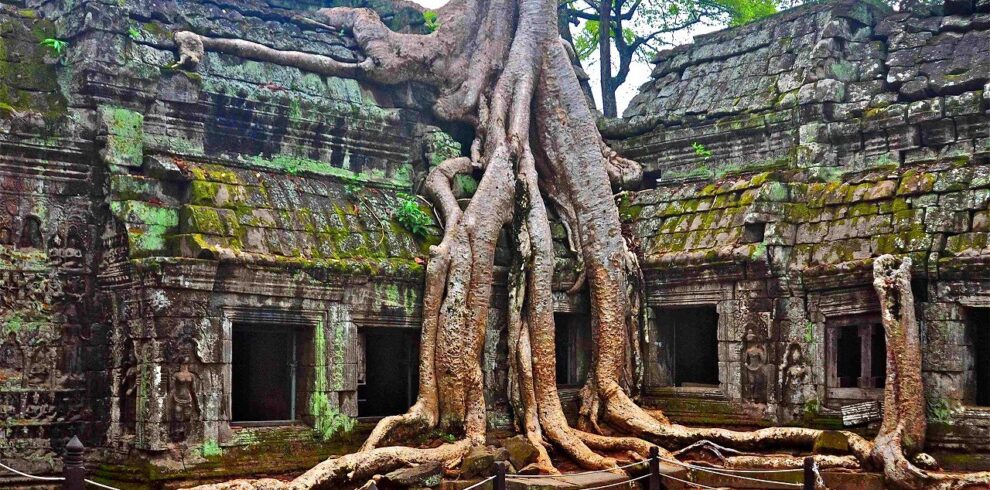
We then continue on to visit the fabulous Ta Prohm embraced by the roots of the enormous fig trees and gigantic creepers. Bear witness to some of the measures being taken to preserve the temple while at the same time allowing nature reclaims the area.
Enjoy our one hour foot massage before transfer back to your hotel at around 6:30 PM.
Inclusion: Transfer, guide, entrance fee, one hour foot massage, breakfast, hotel.
Breakfast at your hotel then 8:00 AM we start the day with a visit to BanteaySrei: nearly everyone's favorite site. The special charm of this temple lies in its small stature, remarkable state of preservation, and the excellence of its decorative carvings. Next is BanteaySamre’srose-coloured sandstone walls decorated with carvings and bas-reliefs.
Finally, we visit Artisan d’Angkor and a local silk farm. Tour of the classes and workshops to get a glimpse into the unique vocational training programs teaching young artists the techniques and styles of classic Cambodian artistry.
Inclusion: Transfer, guide, entrance fee, breakfast, hotel.
Breakfast at hotel. Depending on your flight you may have some more time for shopping. Then we transfer you to the airport for your flight home. Goodbye, and hope to see you again soon!
Inclusion: Transfer, breakfast.
Cost
The Cost Includes
- Accommodation on twin room sharing basis. (Price for 1 person is based on the person staying in a single room)
- Room Category: lead-in room category in each of the hotels.
- Meal plan on MAP basis (daily breakfast & dinner are included in the hotel).
- Shared transportation as per the number of guest.
- An exclusive guide service in Bhutan.
- Applicable monument entrance fees.
- Presently applicable Government Service Tax.
The Cost Excludes
- Any airfare.
- Any meal which is not specified.
- Any personal expenses such as laundry, telephone bills etc.
- Tipping.
- Anything which is not mentioned in the 'inclusion' section.
- Important Notes:
- Rates are quoted in Indian Currency.
- In case of major fluctuation in Dollar, we have to revise the COMO UMA hotel rates.
- Rates are valid only for Indian Nationals.
- Rates are not valid during black-out periods.
FAQs
Annapurna Base Camp is a Grade B or a moderately difficult trekking route. So any fit person can do this trek, even if you do not have any previous experience. You should be aware of what to expect and mentally prepare for it. Then, as long as you will too, you can.
On average, you walk about 4 to 6 hours per day. One or two days can be as less as 3hrs and one or two days can be as long as 7hrs.
The highest altitude reached is 4190m. This is the elevation of Annapurna Base Camp. ABC is the highest we will climb in this trek.
Yes, you can charge batteries en route. Charger should be brought. There are hot shower facilities as well. You may have to pay a certain amount for both ($1-$2). Negotiate. Also, a hot water facility could be free at a lower elevation.
No. There are no ATMs on this trek route. You will have to draw enough cash in Pokhara or Kathmandu. There are a number of ATMs in these cities. Everything is paid in Nepali rupees. So money should be exchanged before the start of the trek.
Yes. The Internet can be accessed in most places. Sometimes, there might be some technical problems. The Internet in Nepal is not as fast as you are used to and at times you can just lose connection.
Not really. It depends on you. If you want, ABC trekking can be done independently. You could hire a guide and a porter by yourself instead of going through an agency or not hire a guide at all. Although, not having a guide can be a little problematic during the offseason.
It really depends on you. Is it your first time in Nepal? How confident are you of being able to find your way around? How pressed on time are you? If you go through an agency, it will be costlier but everything will be planned. You will only have to come, trek and return.
For the Annapurna region, pay for guides range from $20 to $30 per day and porters take $15 to $25 per day.